
Even in a world of digital wallets, instant transfers, and mobile banking, one old-school financial tool continues to attract modern criminals: the paper check. As surprising as it may sound, check fraud is not only alive and well—it’s increasing at an alarming rate.
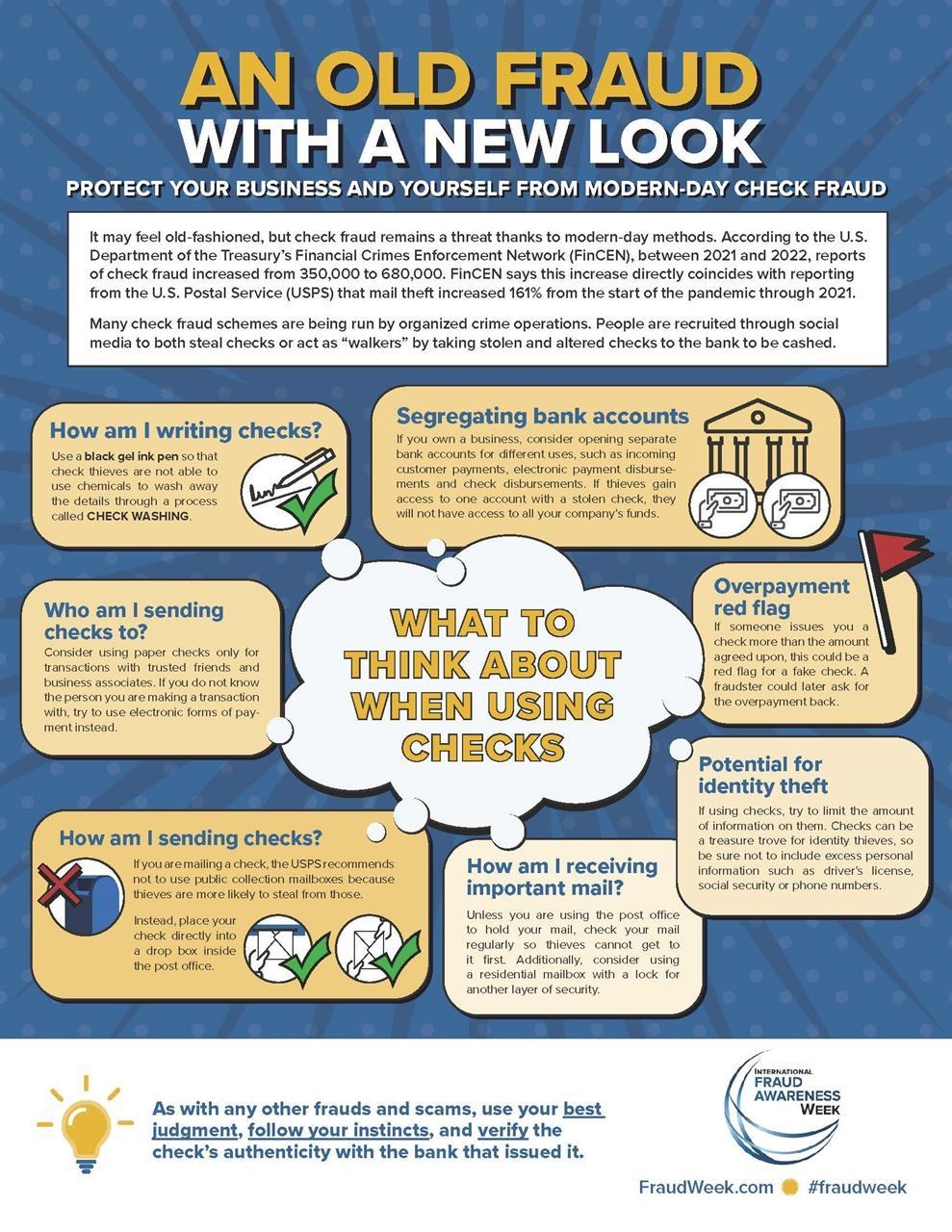
According to the U.S. Department of the Treasury’s Financial Crimes Enforcement Network (FinCEN), reports of check fraud nearly doubled between 2021 and 2022, rising from 350,000 to 680,000 cases. Much of this surge is tied directly to organized theft of mail from the U.S. Postal Service, which saw mail-theft complaints increase 161% since the start of the pandemic. In the fraud-prevention world, that is a staggering trend.
As a Certified Fraud Examiner, I regularly see the emotional and financial toll these schemes take on individuals, small businesses, and nonprofit organizations. The old stereotype of a lone thief forging a signature has evolved. Today’s check fraud is often run by organized groups who recruit “walkers” through social media—people who carry stolen or altered checks into banks for cash-outs. Once fraudsters compromise an account, the losses can be devastating.
The good news? Awareness and preventive habits still go a long way. The attached graphic highlights several practical safeguards worth revisiting. Below is an expanded breakdown of these red flags and best practices to help you stay ahead of modern-day check fraud.
**1. How Am I Writing Checks?
Protect Yourself From Check Washing**
Fraudsters are not just stealing checks—they’re altering them through a chemical process known as check washing, which removes ink so criminals can rewrite payee names and dollar amounts.
Protective tip:
Use a black gel pen when writing checks. Gel ink permeates the paper in a way that is far more resistant to chemical removal. A simple pen choice can be the difference between safety and a weeks-long fraud dispute.
**2. Who Am I Sending Checks To?
Trust and Verification Matter**
Only send checks to individuals or businesses you know and trust. If the person or vendor is unfamiliar, consider using a more secure electronic payment method.
This is especially important for small businesses. Fraudsters often target companies that mail high volumes of checks, betting that busy accounts payable staff may not recognize irregular patterns quickly.
**3. How Am I Sending Checks?
Avoid Public Mailboxes**
The USPS has openly warned consumers and businesses not to use public blue collection boxes for outgoing mail. Criminals increasingly target these boxes because they often contain checks—and sometimes even arrow keys used to open other mailboxes.
Best practice:
Place your mail directly inside your local post office lobby, or hand it to an employee during business hours.
**4. How Am I Receiving Important Mail?
Protect Your Inbound Mail Too**
Thieves don’t just target outgoing mail—they also watch for paycheck stubs, refund checks, and financial documents being delivered.
If you cannot check your mailbox consistently, consider:
- a locked or secure mailbox
- a rental box at your local post office
- USPS Informed Delivery to preview incoming items
These steps help prevent thieves from intercepting financial information that can be used to commit check fraud—and identity theft.
**5. Overpayment Red Flags
When “Too Much” Is the First Warning Sign**
In many business email compromise scams, the fraudster sends a forged or stolen check for an amount greater than the agreed-on price. They then ask the victim to “refund the difference”—typically through a method that cannot be reversed.
The original check eventually bounces, leaving the victim responsible for the refund they sent.
If someone overpays you unexpectedly, pause. As a CFE, I always advise clients to treat overpayment as a flashing red warning sign.
**6. Limit Information on the Check
Reduce Identity Exposure**
Checks contain a surprising amount of personal information: name, address, bank, routing number, account number—and sometimes even a phone number.
The more information available to a criminal, the more damage they can do.
If possible, avoid printing unnecessary details on your checks, and consider using a P.O. box rather than a home address.
The Bottom Line: Fraud Evolves, But Awareness Still Works
Fraudsters are constantly adapting, but the principles of fraud prevention remain the same:
- Use your best judgment
- Follow your instincts
- Verify anything that feels off
And if something doesn’t seem right with a check—whether you’re writing it, receiving it, or mailing it—take the extra step to confirm authenticity with your financial institution.
As we recognize International Fraud Awareness Week, it’s worth reminding ourselves that preventing fraud is not difficult—it simply requires alertness and intentional habits. Check fraud may be an old scam, but it has a very modern impact. Staying proactive can protect your accounts, your business, and your financial peace of mind.
 Janicek Valuation & Forensic Services, PLLC